





Newest Features
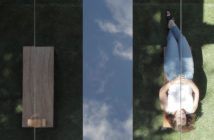
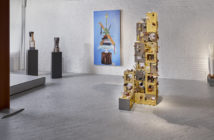
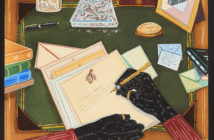
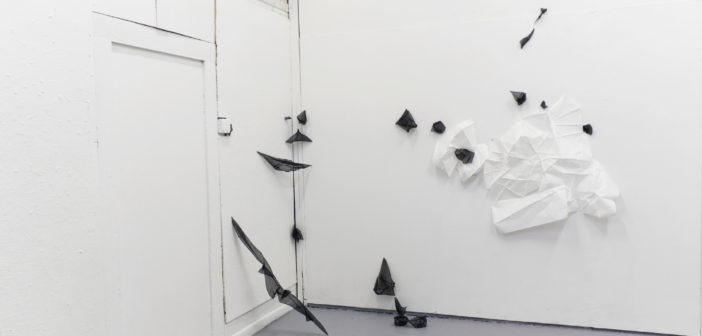
Today, I am in transition. My art, my home, my studio, my day jobs, and my community are all in flux. I recently moved to New Jersey from Boston and then left shortly after to come to Vermont for a residency at Vermont Studio Center (note to reader: Don’t think twice. Apply here. Do it!). I feel the metamorphosis of an artist leaving an MFA program is not a setback; rather, it is the rising action in a series of constant transitions. It is the beginning, somewhere to go next, a place…
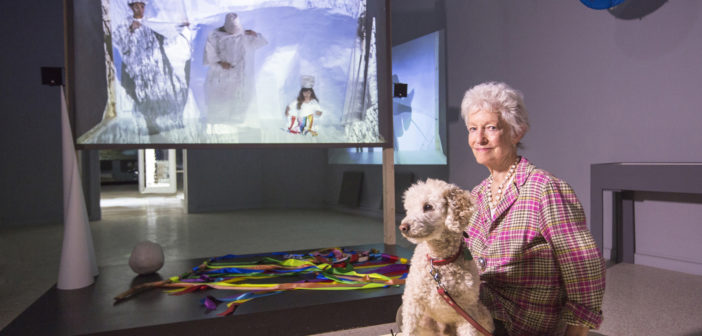
Since 1895, cultural institutions from around the world have gathered at the Venice Biennale to present the latest developments in their country’s visual arts, performance, and design. With the Biennale attracting over 500,000 visitors last year, prospective contributors vie to present new projects and exhibitions. In 2015, the Art Biennale, focusing on advances in contemporary art, featured 138 artists from 53 countries. For the 56th and 57th Art Biennale, the U.S. Department of the State’s Bureau of Educational and Cultural Affairs selected two university museums from the Greater Boston Area to represent…
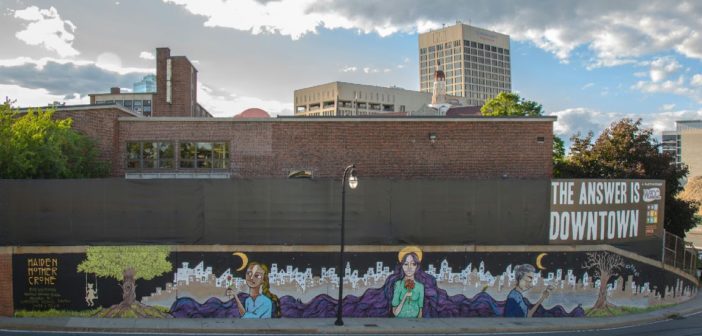
Each day that you and I choose to venture outside of our dwellings, we navigate streets, sidewalks, and other public infrastructure made not by us, but for us by other people who, assumedly, had our best interest in mind when creating them. How many times have I thought, “That idiot, I bet they don’t even walk!” about a depersonalized traffic engineer as I wait to cross four lanes of deadly traffic? Design may be the most straightforward example of a creator-user relationship, and perhaps the easiest to critique. It works, or it…
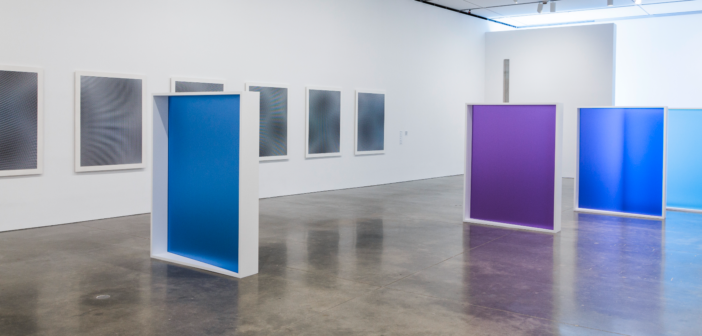
In his quintessential text on vision, Techniques of the Observer, author and art historian Jonathan Crary notes: “The mind does not reflect truth but rather extracts it from an ongoing process involving the collision and merging of ideas.”(1) The nineteenth-century theorists he cites understood perception as being in a state of flux, informed by past sensations and transcending the present moment. The photographs of Liz Deschenes, whose first mid-career survey is currently on view at the Institute of Contemporary Art, Boston, seem to echo this sentiment. Dating from the late 1990s to…
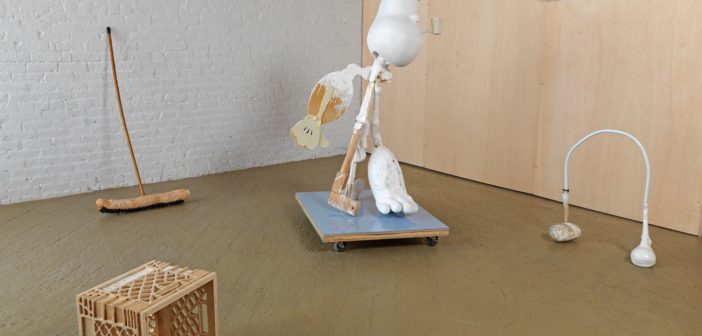
The sculptures in VERY’s inaugural show, Sex Not Sex, inhabits the space in much the same way as the patrons at the opening: some sitting, some standing, others propped against the wall. In a gallery that feels more like a family room than a white cube, the work of Arthur Henderson does not simply provoke discussion but quietly joins the conversation. A graduate of MassArt and now based in Connecticut, Henderson makes objects that are perverse, playful, and recognizable, constructed with a slew of different materials that all together nudge us towards…
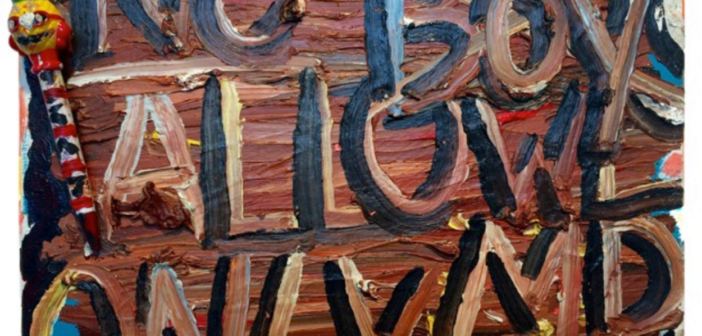
Curated by Carroll and Sons, No Boys Allowed was developed through a collaboration between two of the exhibiting artists, Sheila Pepe and Carl Ostendarp. The exhibition investigates a variety of abstract artists whose work embodies the feminist perspective in late twentieth-century modernism. Rooted in 1960s anti-war and Civil Rights movements, feminism was initially a reaction against modernism’s underfeminization, seeking to influence cultural attitudes and embracing alternative materials, imagery and techniques that lacked historically masculine references. The forms and methods of feminist art have since broadened and reflect a more globally informed perspective that…
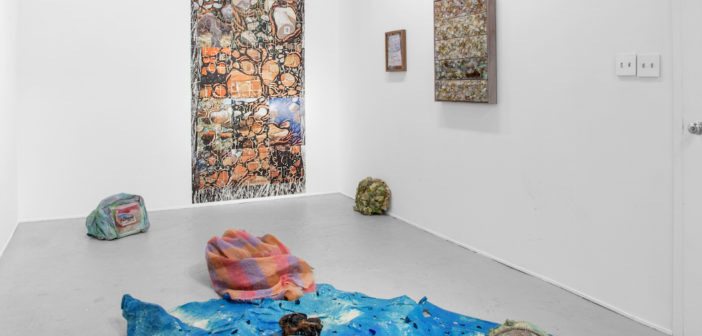
The sixteen busy sculptures, panels, and photographic collages in this strange, compact show hang back coolly in the space, waiting for the viewer to draw them out. Audrey Hope’s and Dan Boardman’s works are so encrusted with information that the heterogeneity of their accumulation becomes a homogeneous tar. The variation of information is so evenly dense that it has a lulling, entrancing effect. But when one steps closer and allows one’s eyes to settle, the works transmute. Curator Sean Downey says he’s been reading and re-reading Solaris by Stanislaw Lem: In the…
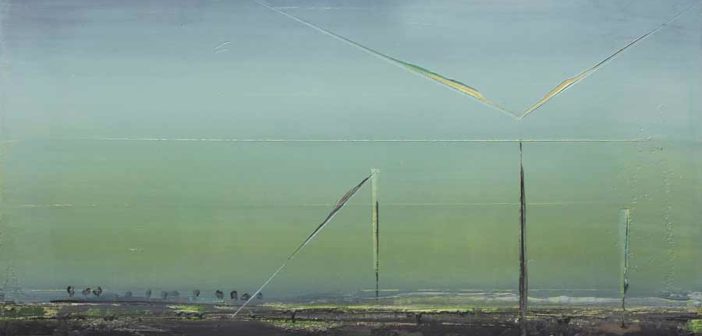
Wilhelm Neusser and I first met in a roomful of paintings at an art auction. I asked him if he had a favorite of the works on view, and he began speaking about perceived intentions of many of the artists, their methods and how their imagery related to art history. Studious elegance and kind wit are two of Neusser’s most obvious characteristics. Both were abundant during an interview in his Somerville studio, as we discussed his growing up in Germany, emigration to the United States and the biographical, cultural and technical components…