





Newest Features
Only what is shown to us is a prompt I used to begin writing about the exhibition I curated, The Shifting Space Around Us, Megan and Murray McMillan at Ortega Y Gasset Projects in Brooklyn (August 27 – September 25, 2016). I viewed the installation while pausing the video every few moments to write a detailed, but unornamented description of what unfolds in the two-channel video installation–a transcription. The exercise itself resonates with Murray McMillan’s point that because the narrative elements of the piece don’t offer a conclusion, and the setting and other…
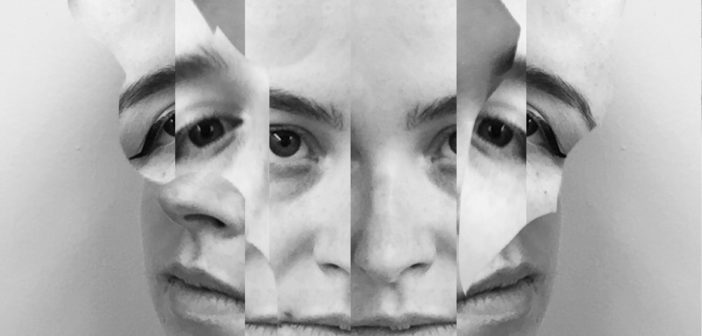
“I make these when I’m not making my ‘real’ work.” I heard this statement fall out of my mouth and stopped myself, horrified. I was at the opening of the BLAA Summer 2016 exhibit You Think It’s ____, But It’s Really ___, nervously explaining my piece to a fellow artist. In one sentence, I was both illustrating and undermining everything I wanted to talk about in my piece. My internalized ableism was rearing its head. I was showing a piece comprised of 84 collages made over the previous 6 months, shown as…
In First Light: A Decade of Collecting at the ICA, the Museum reframes its own history by showcasing the stories within its collection. The ICA was established in 1936. Yet it only started collecting artworks ten years ago, which coincided with the Museum’s move to its iconic Diller Scofidio + Renfro building. In its mission statement, the ICA commits itself “to present outstanding contemporary art in all media…that is deserving of public attention and has not been presented in-depth to Boston audiences.”[1] Past exhibitions of the ICA’s collection have focused on the artworks’ materials…
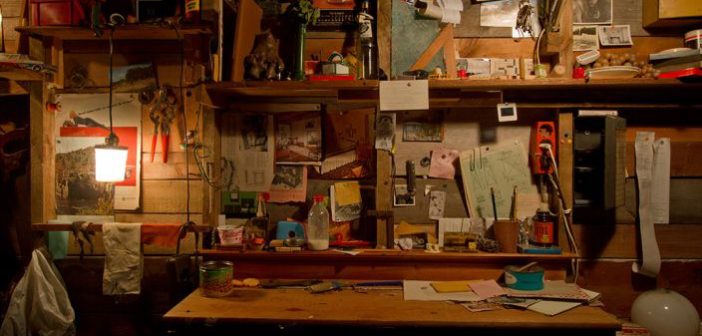
Two things are surprising about Ethan Hayes-Chute’s project at the List Visual Art Center: it is much funnier than expected, and it is deeply sincere. The show consists of two primary areas: a work bench serving as a backdrop for two short videos, and an installation of a partial cabin that is home to a mix of sculptures and ready-made elements. The didactic literature from the List focuses on aspects of self-sufficiency and self-preservation in Hayes-Chute’s work, highlighting the reclamation of waste and obsolete technologies for practical use. The artist frequently makes…
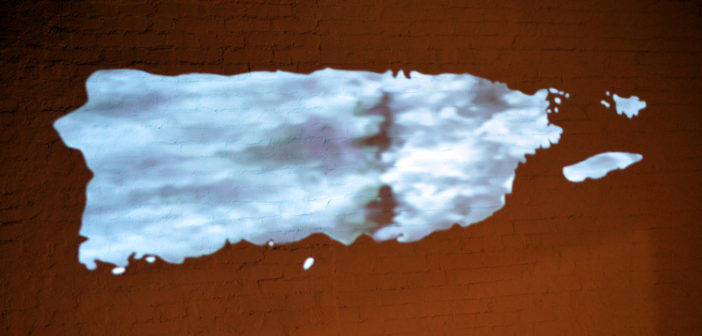
Many didactic art exhibitions refer to events that have already happened, appealing to viewers’ collective memory rather than urging collective action. Not so for ¡CAPICÚ! Let Them Eat Cake, which recently closed at The Distillery Gallery. The exhibition, organized by and showcasing work from Shey Rivera Ríos (performance artist, poet, and recently appointed Artistic Director of AS220) and Anabel Vázquez Rodríguez, (curator, visual and performance artist), was an imperative response to the recently passed Puerto Rico Oversight, Management, and Economic Stability Act (PROMESA), signed into law by President Obama this past June. Initially…
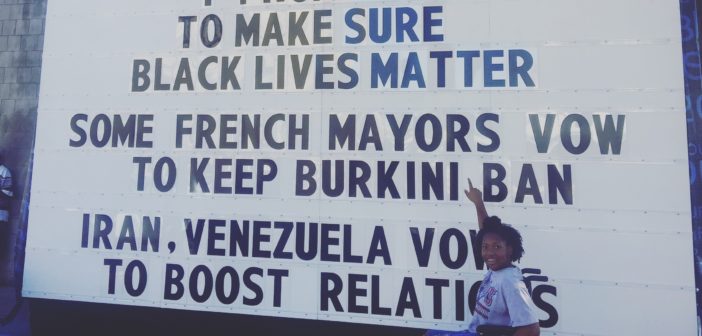
“…the problem lies not whether to reach for either larger or more selective audiences, but rather in understanding for ourselves our own definitions of those groups we wish to speak to, and in making conscious steps to reach out to them in a constructive and methodical way”. Through many experiences in the recent years, I have come to realize that our “self” is the construct of a vast collection of people and perspectives, which influence our thoughts and values. When we speak of to our self, it is an inward speech reflecting…
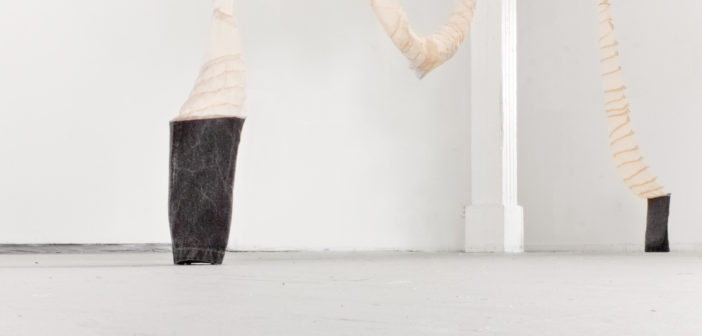
These are glimpses of my experience and thoughts recorded in my journal from my time as an artist-in-residence at the Vermont Studio Center (VSC) last month. While reading my journal I reflected on what I had been feeling at the time and what I feel now. It has been an amazing experience to relive the last month through my scattered thoughts, lists of words, experiments, title searches, and sketches. The Vermont Studio Center & Johnson, Vermont Vermont is a lush state with unbelievable views of mountains and fresh clean air. It runs on…
The question of documentation is rooted in the history of the avant-garde. Think of Dadaist or Surrealists recording their work via sound or the nascent technology of film. Think of Hans Namuth filming Jackson Pollock as he dripped his paintings on the studio floor. Documentation assumed a new urgency as performance and body art emerged as powerful practices in the late 1950s and 60s. By the 1970s, Mobius founder Marilyn Arsem very consciously considered how her work would be documented. Early in Arsem’s career, writes Edward Saywell in his essay included in…