





Newest Features
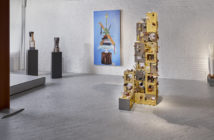

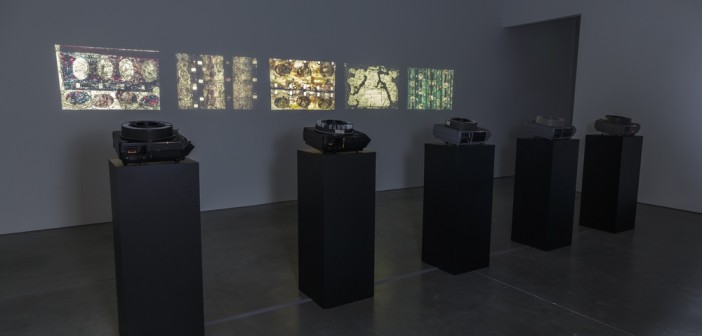
Price with #9 A Study in Decay at the Institute of Contemporary Art. Photo: John Kennard. Some of my fondest memories during my college years can be traced back to my art and architectural history courses, sitting in a dark lecture hall absorbing the sights and sounds that emerged from the slide projector. The slide projector, as we know it today, dates to 1935 when Leopold Mannes and Leo Godowsky invented a process that would later be patented as Kodachrome. Considered now an obsolete technology only used by stubborn college professors…
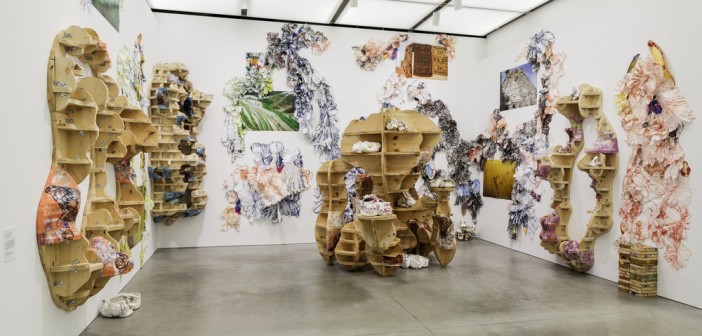
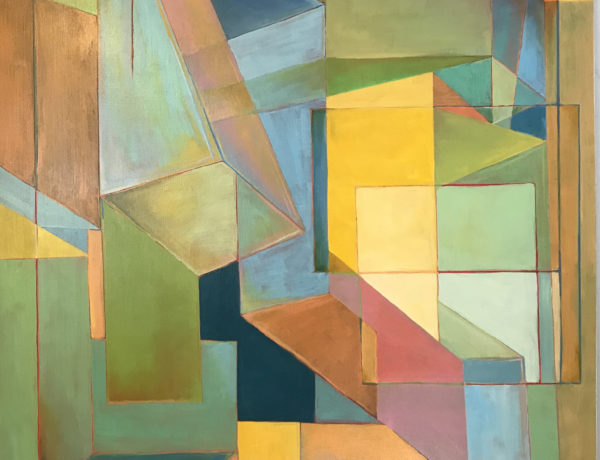
It is curious that Mark Cooper’s work, which is the most visually and spatially boisterous, the most materially lustful (though not the most fetishistic) of the four finalists’, is that which directly references Buddhist cultures, concepts and practices of meditation, contemplation, immateriality and emptiness. The jovial mess named yu yu tangerine isn’t the cast-off of a frenzied unburdening. It is the offspring of a creative process that harnesses visual language from a multiplicity of sources, pulling a commotion of color, line, shape, texture, form into a single space, and leaving it…
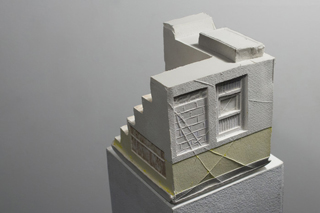
Every week, BR&S picks out a series of gallery events, screenings, exhibitions, performances. Here are our choices for you to go & see this week: • Events Tuesday 4 — Monday 17 June BSA Space, 290 Congress Street, Boston ConnectHistoric Boston Opening Reception: Tuesday June 4 6-8pm / Free Friday May 3 Photo: SoWa Artists Guild SoWa, 450 Harrison Avenue, Boston SoWa First Fridays 5-8pm / Free Saturday June 8 left: Structure atop the granite boulder at 18 Arlington Street c.1860 Photo: Proctor Brothers right: Emily Speed . Inhabitant (inside) 2009.…

In this episode of Studio Sessions I talk with Brooklyn artist Alex Kvares about his variety of drawings that often border on becoming psychedelic. Alex earned a BFA in painting from the University of Kansas, and an MFA in printmaking from the University of Texas. His drawings often contain unusual, sometimes grotesque figures in abstract environments. In his most recent drawings his abstract patterns and forms made with dense clusters of marks consume the entire page. Listen as Alex explains where this imagery is drawn from, and the various cycles his ideas…
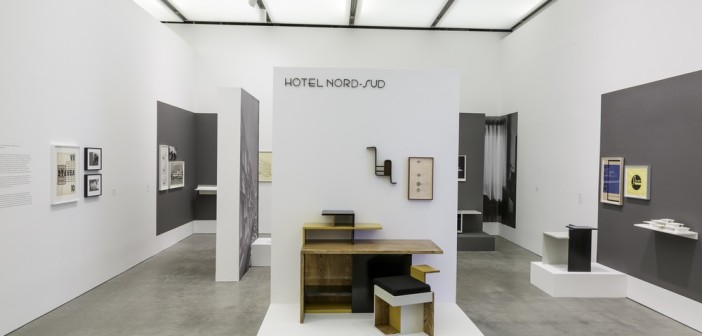
At first glance, Katarina Burin’s installation in this year’s Foster Prize looks out of place within the ICA’s sterile, white gallery space.Hotel Nord-Sud 1932-34: Design and Correspondence (2013) is centered around Petra Andrejova-Molnár, a female Czechoslovakian architect active during the European inter-war period, and showcases her crowning architectural achievement: the Hotel Nord-Sud, destroyed in World War II. Burin presents Andrejova-Molnár’s sketches of the hotel, as well as artifacts from it, alongside archival materials and photographs of the architect and her contemporaries. Situated next to Sarah Bapst’s intricate and meticulous deconstructed air conditioner…
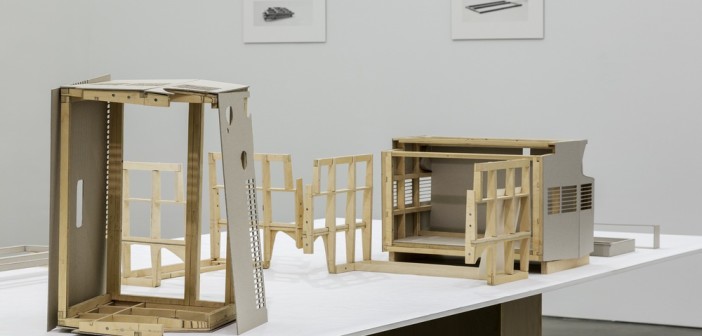
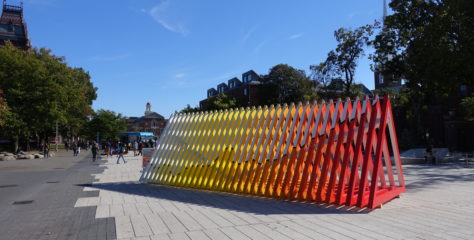
Sarah Bapst’s work is compact, unhurried, and subtle. It is the opposite of the work in the joke that named Big Red & Shiny.1 Being the quiet person in the room can be a hard road though. From the seventeenth-century salon to modern biennials, being able to stand out in a group is a key skill to have as an artist. If your work is small or your work takes longer than a few seconds to figure out, you may find it hard to compete in an environment that often rewards…
What a way to mark the end of our first year back in town! Your very own Big Red & Shiny has been nominated three times this year for Best Blog or Best Local Website by three reputable polls. As we all know, the Boston Phoenix is sadly no more, and it seems that their poll closed without tallying the votes (though we hope this is not true). In the last week we’ve been notified that we have been nominated for two more awards! Boston Magazine’s Best of Boston Reader’s Choice Award…
Potato Power, LaJoie Growers LLC, Van Buren, Maine 2012 #1/5 23×29″ Pigment print ©Caleb Charland We think we know how photographs are made. It’s an almost instantaneous assumption that informs our perceptions, to some degree or another, in the gallery and elsewhere. But if you can decipher Caleb Charland or Maggie Stark’s processes at first blush, then you must know something the rest of us don’t. Because their practice appears to be pure magic. I spent some time atGallery Kayafas, gazing quizzically at these prints, until director Arlette and her assistant…