





Newest Features
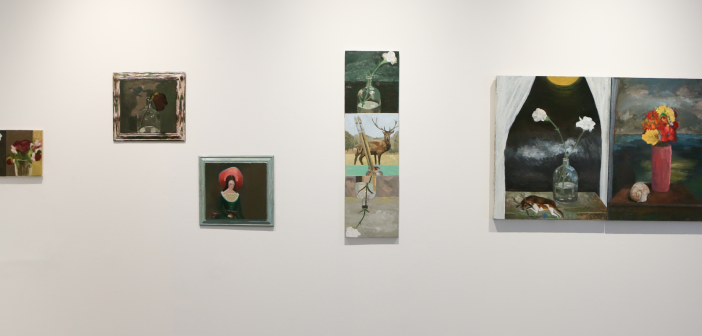
My first introduction to Matt Noonan’s paintings was an eclectic arrangement of oils with dense imagery and rich colors on wood or canvas in the group exhibition Arcadia: Thoughts on the Contemporary Pastoral, curated by Steve Locke and recently on view at the Boston Center for the Arts. Noonan’s work stopped me in my tracks. The subjects included wilted flowers in vases and a female figure in a nun’s habit, her head surrounded by a fuschia halo. Each painting was a different size—some were framed, others were not. With ominous themes such…
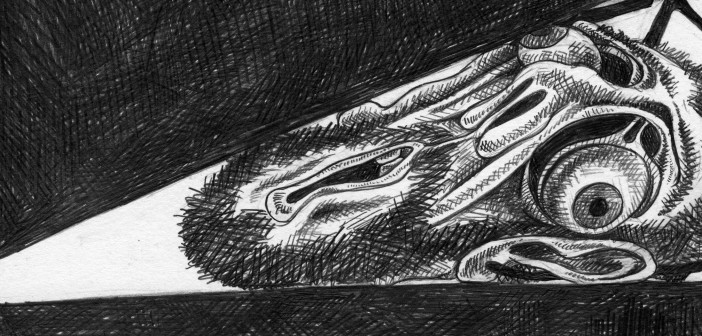
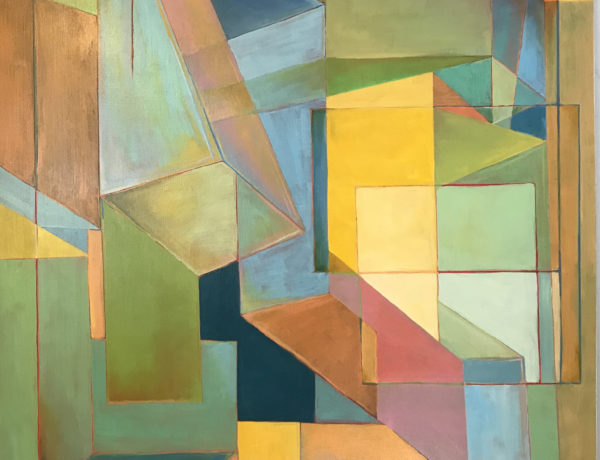
“Imagine a vast sheet of paper on which straight Lines, Triangles, Squares, Pentagons, Hexagons, and other figures, instead of remaining fixed in their places, move freely about, on or in the surface.” Thus begins Edwin Abbott’s 1884 novel Flatland: A Romance of Many Dimensions, which reduces social classes to geometric forms, the more sides the higher the class. Touch is the primary faculty of perception in the novel. The narrator explains, “Our sense of touch, stimulated by necessity, and developed by long training, enables us to distinguish angles far more accurately than…
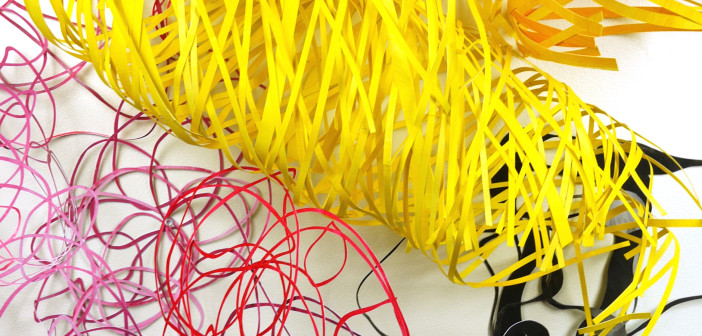
Paper is the surface, the substrate, the thing acted upon. It buckles (sometimes literally) under the weight of an artist’s wishes, absorbing paint, water, ink, paste. Though it groans with the occasional curl, crease or tear, paper is usually cooperative, and open to experiment. Barbara “Babs” Owen gives pulp new purpose in her latest solo show, Paper is the Material, on view through November 14 at Hunter Gallery in Middletown, RI. The exhibit is a concise survey of Owen’s work from the past two and a half years. The titular material is…
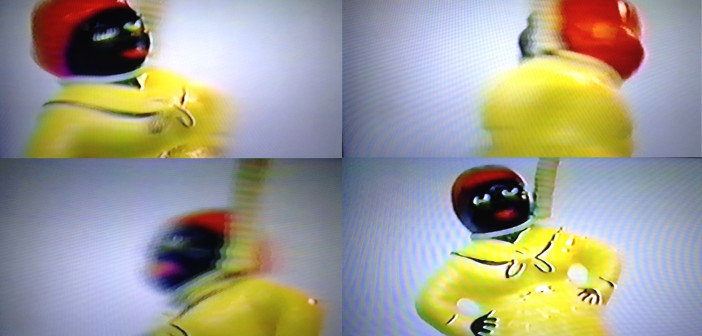
“[Women] are sex objects, spoils in the war between white males and black males over which group will dominate the planet.”[1] Much of Persuasions 1990—2015, the mid-career survey of Rhode Island-based visual and performance artist James Montford (recently on view at the Mills Gallery at the Boston Center for the Arts), is constituted by investigations of blackness and shortsightedness. Montford’s prolific use of afronauts, black holes, and cosmic dark matter (outer space populated with the artist’s signature pantheon of racialized celestial bodies), floating in mathematical freedom amidst the colorful and seemingly endless night of…
Welcome to Six Block Rule, a series of conversations considering art openings, panels, exhibitions and more happening in the Boston area. Titled after the idea that viewers should take that distance before making critical comment, Six Block Rule seeks to present an honest, accessible dialogue about art happenings that shape the cultural landscape and contemporary art community. In our first installment, senior editor Leah Triplett Harrington and board member Emily Glaser discuss Lorraine O’Grady: Where Margins Become Centers on view the Carpenter Center’s Sert Gallery. This is O’Grady’s first exhibition at the…
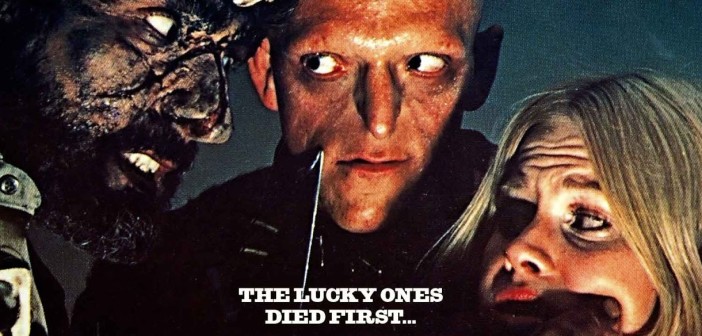
“Horror films don’t create fear. They release it.” -Wes Craven Wes Craven, who died on August 30th at 76, was a gentle, avuncular, and piercingly intelligent individual who created films horrific in their violence, sadism, and brutality. Raised in a strict, self-abnegating Baptist family where even movies were proscribed, his earliest memory was his terror of his brooding, raging father who died when he was six. Twenty-seven years later, Craven began to draw on these memories of fear to redefine a frequently dismissed film genre. His films are riddled with portrayals of…
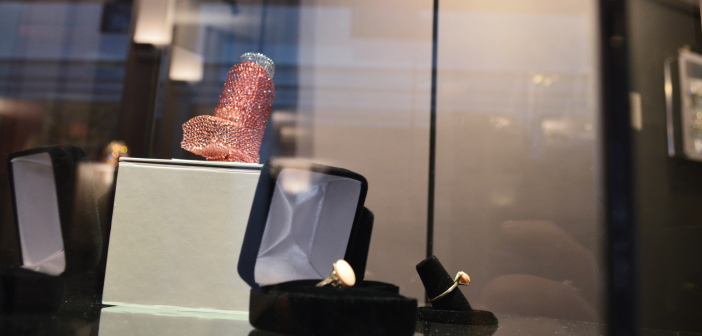
Pills are talismans. They are tiny, portable and therapeutic, secular-but-sorcerous objects whose enchantments are swiftly and secretly invoked. Psychoanalyst Ernest Becker wrote, “Pills and pellets are forms of fetishes, ways of overcoming anxiety, the terror of the body, in a reassuring magical way.” That’s not entirely untrue, but it rings a slightly accusatory tone. Similar sentiment is common today amongst otherwise educated First Worlders, who have moved from blind faith in biomedicine to cult-like appreciation of homeopathic gurus. Somerville-based artist Judith Klausner has a more forgiving view of pill-popping, an attitude required…
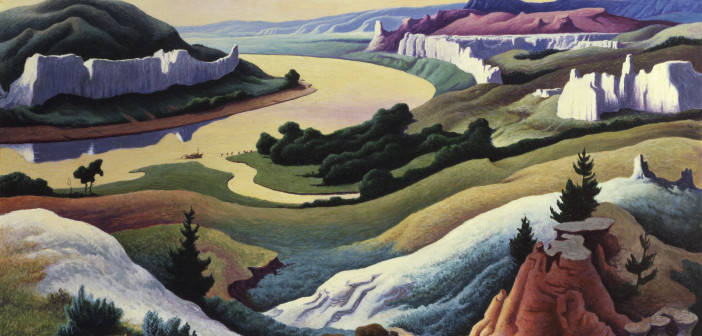
American Epics: Thomas Hart Benton and Hollywood, recently on view at the Peabody Essex Museum (now travelling across the country through fall 2016), was a stunning, densely-mounted and sharply focused show that brought to light the cosmopolitan side of a painter imbued with the wanderlust and social concerns of a hard-drinking Woody Guthrie. Along with Grant Wood, Benton (1889-1975) is probably the most well known American Regionalist painter. With a fierce contempt of modernism and abstraction, Benton’s compositions are clearly influenced by High Renaissance compositions and the exaggerated bodily contortions of Mannerism.…