





Newest Features

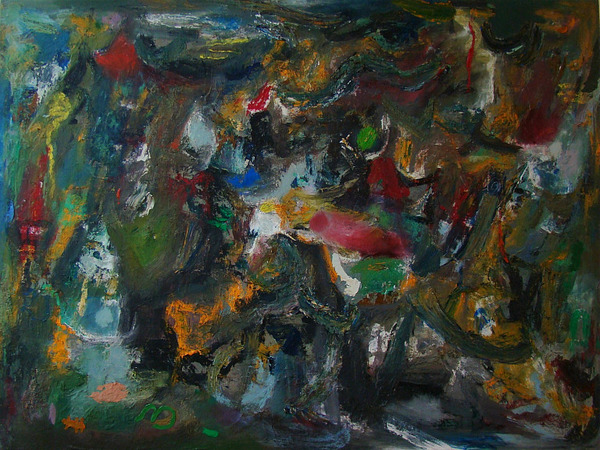
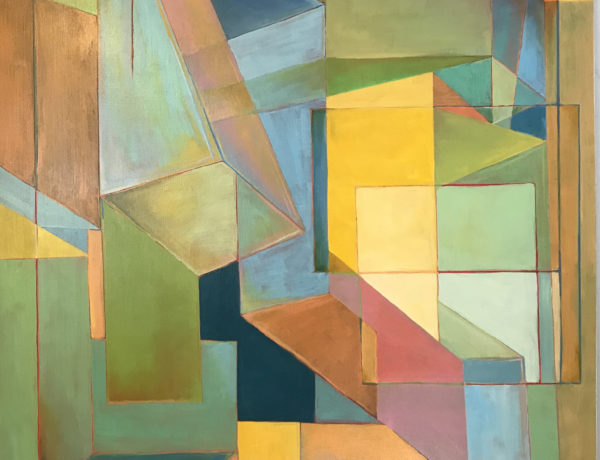
By MIKE MENNONNO Stacey Alickman’s work comes in two flavors: acrylics – or oil – on canvas, and gouache on paper. Her rich, dark and dense acrylic and oil canvases are sprinkled with bright, fanciful creatures composed of simple shapes, distinct echoes from the distant, but still eminently approachable modernism of Paul Klee and Joan Miro. These canvases have a dreamy underwater quality: some objects can be seen undulating in the shadows quite literally below the surface, while others bob sharply into view. The more frenzied of these, “Claudia’s Nutshell,” is a…
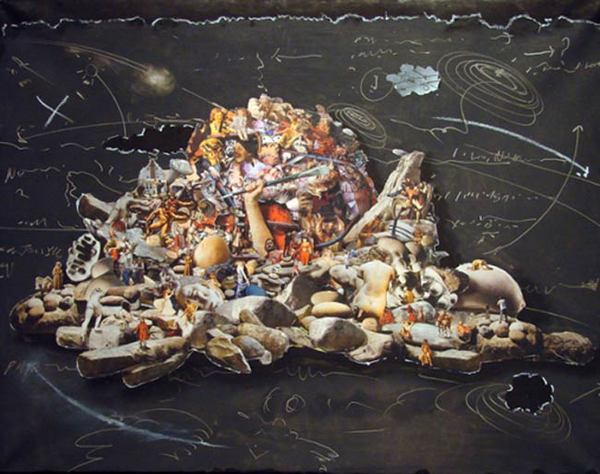
By JUDY KERMIS BLOTNICK “Painting broke my heart…. but it also saved my life,” said Gerry Bergstein at his gallery talk on December 5th. A romantic and a realist, an avid fan of contemporary culture and a man whose visual references channel venerable old masters while tossing Philip Guston and Robert Crumb into the salad. Bergstein’s work softly grabs the viewer by the lapels and then turns up the volume. There is no “nice” world for artists, no genteel peace to be found and painting water lilies is not an option in…
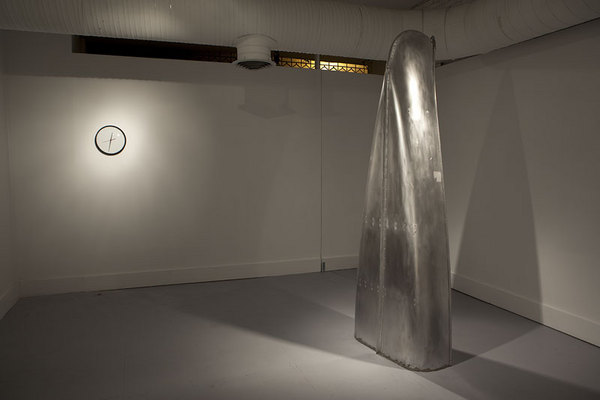
By STEPHEN V. KOBASA Comedy refuses mortality. That is Buster Keaton’s lesson, and why, I think, he is a greater artist than Charlie Chaplin. There is something too elaborately contrived about all of Chaplin’s encounters with disaster; he simpers too much to ever make the threats he faces seem credible. Although Keaton is never surprised by the possibilities of violence which the world offers, he knows that they are real. Doomed, but unmoved, his persistence is never smug or self-conscious. Always on the edge of extinction, Keaton knows that comic timing is…
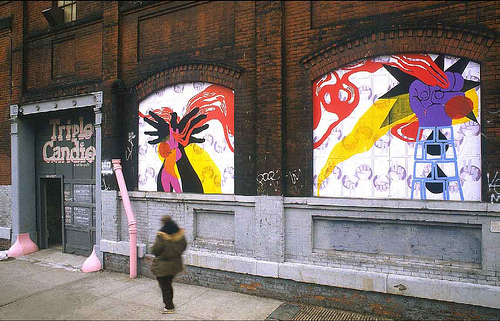
By MICAH MALONE & MATTHEW NASH While editing the article “How To Start And Run An Alternative Gallery Space” by Big RED publisher Matthew Nash in issue #118, editor Micah Malone proposed: I would love a piece that talks more about “non commercial” art and its distinction from “art that doesn’t sell”. If only because the type of art that thrives in alternative spaces must be somehow different from the commercial galleries, and that difference, I think, should be bigger than simply not being ready for commercial status. This launched an email…

By ALISE UPITIS & MEG ROTZEL Performa, the New York-based performance art biennale, had its third iteration in November. Performa’s founding director and curator is RoseLee Goldberg, who in 1979 published the first, now seminal, history of performance art. This monograph takes Italian Futurism as the commencement of performance art, and Performa 09 coincided with the centenary of the publication of F.T. Marnetti’s Futurist Manifesto. At the Italian Cultural Council, Futurist Manifestos contained a collection of archival documents and Feminist Futures displayed primarily photographs relating to Valentine de Saint-Point’s engagement with Italian…
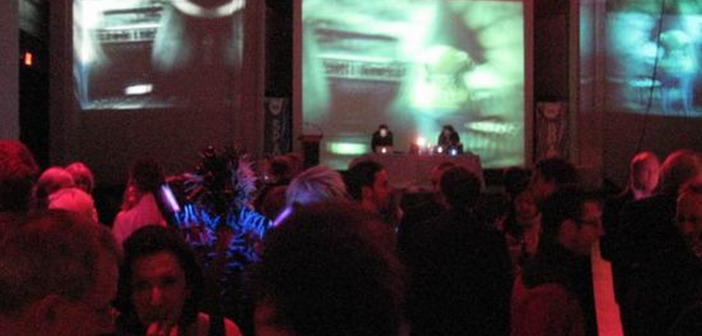
Last evening at MassArt’s Pozen Center, about 200 people gathered for “Spark: A Gala Celebration”. The event was created for three reasons, each worth a party in their own right. The big news of the evening was that the Axiom Center for New and Experimental Media, celebrating their fifth anniversary, would be merging with Boston Cyberarts. This merge has been a while in the making, and is very logical for both organizations. Cyberarts has been working for over a decade to create biennial festivals of new media art, working with most of…

By MATTHEW NASH Of all the things I find most difficult as an artist, it is the problem of turning one’s own personal experience and ideas into something that others can understand that seems to be the most universal. Many artists make work from their own lives, sometimes directly by photographing, filming or painting the world around them, and other times indirectly through metaphor, iconography and abstraction. Sometimes we think our work speaks, but others don’t get what we’re saying, or they put the pieces together in ways we weren’t expecting. I…
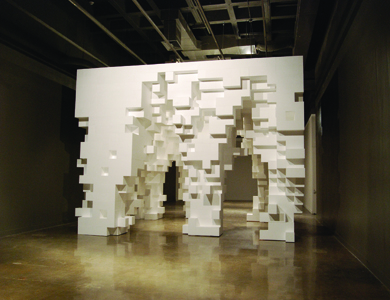
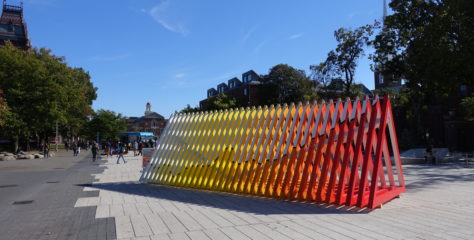
By JAMES A. NADEAU It seems fitting that Tobias Putrih and MOS (an architectural collective) have their recent piece Without Out installed at MIT. If for no other reason that it’s aesthetic certainly reflects a couple of buildings not only on the MIT Campus, but also in the Boston Area (Boston City Hall, MIT’s Stratton Student Center and Dewey Library). These buildings are examples of the Brutalist style of architecture, a style that Putrih and MOS certainly evoke in their sculptural work. They build architectural spaces using Styrofoam and plywood. Their structures…