





Newest Features
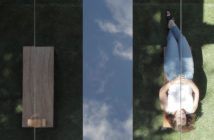
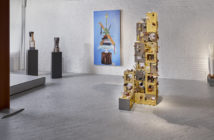
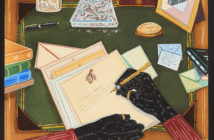

By STEVE AISHMAN The Storm and the Sculpture The snowman is the quintessential piece of vernacular sculpture. True, people who don’t consider themselves artists also make sandcastles, bonfires and even Christmas lights can be viewed as vernacular installation art, but the snowman seems to hold a special place in both sculpture and culture as a whole. How many other types of sculpture have their own fully developed mythology with movies, books, songs, sub-characters, spin-offs, etc.? No one has ever heard of Sandy the Sandcastle Queen, but everyone can hum along to Frosty’s…
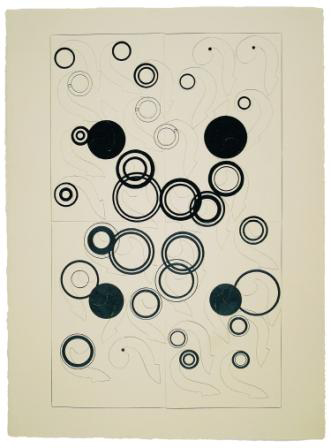
By DAVID DE VERNY Most works of art, especially in the visual arts, are created to capture concepts in a specific time, space or location. Object making, installation art, earth works or performance art are all about the here, now and for that matter the space, that sculpts the object, crafts the simulacra, and locates the conceptual. The seven multi-panel drawings in David Lloyd Brown’s exhibition Genetics, on tour in the latter weeks of 2009 at theAyscoughfee Hall Museum, in Spalding, England embrace wider territory. Originally designed for the specific geographic location…
By REBECCA NOLAN & ROBERT WILSON Rebecca Nolan and Robert Wilson offer a glimpse of some of the work that was on display at this year’s Art Basel and SCOPE in sunny Miami Beach, Florida: Art Basel Miami Beach SCOPE Miami “Art Basel Miami Beach” was on display from December 3-6, 2009 and SCOPE Miami was on view from December 2-6, 2009 in various venues in, and around Miami Beach, FL. All footage is courtesy of the artists and respective venues. Rebecca Nolan is a photographer and professor at Savannah College of…
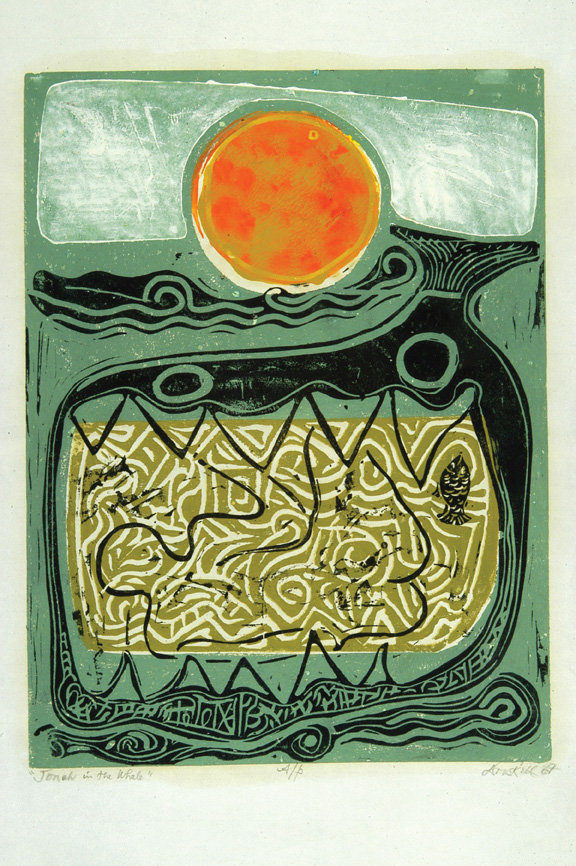
By ELENA SARNI The exhibition Evolution: Five Decades of Printmaking by David C. Driskell is making its last stop at the Portland Museum of Art after a two year national tour. The exhibit was organized by the David C. Driskell Center for the Study of the Visual Arts and Culture of African Americans, which is part of the University of Maryland, College Park where Driskell is Professor Emeritus. The exhibition follows the life of Driskell and his career as an artist, art historian, professor, collector, and curator. It features eighty prints and…
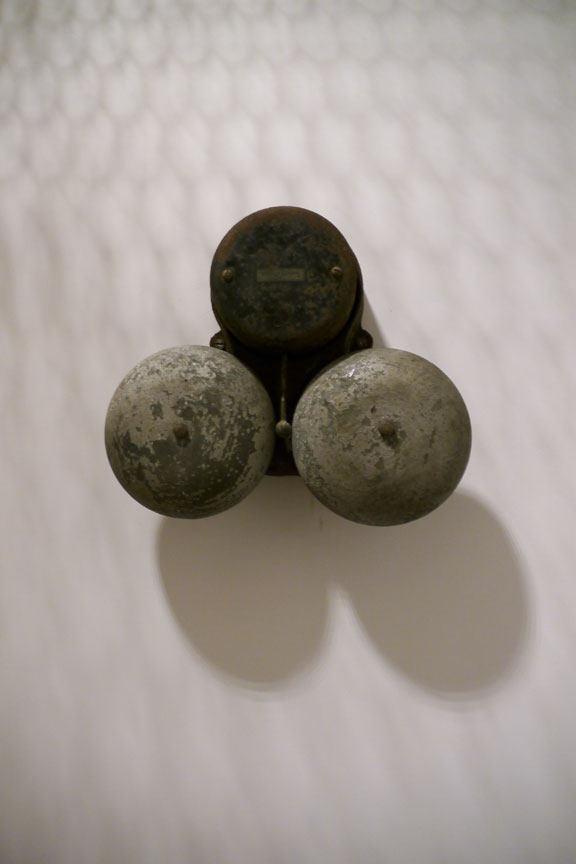
By MATTHEW NASH Tocsin (tok-sin) n. 1. a. An alarm sounded on a bell. n. 1. b. A bell used to sound an alarm. n. 2. A warning; an omen. Liz Nofziger makes installations that are more than site-specific; they are about the specificity of a site. Many of her pieces have been created from the very history of the locations in which they are shown. Molasses is piped from the walls of a former rum distillery, Pepsodent toothpaste emerges from the core of an old factory. For Tocsin, a former firehouse…
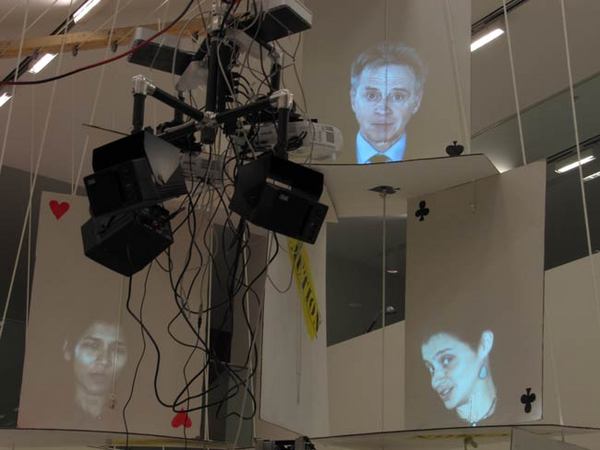
By JESSE KAMINSKY Parsing the causes and consequences of the current financial crisis can be truly daunting, especially if you, like me, are untrained in the current financial cover-up lingo. To the casual observer, there seem to be as many theories about why we’re in this mess and how we can get out as there are experts, with the only unifying factor among them being unhappiness with our current trajectory. Though it’s unclear what the full impact of this collapse will be, it was only beginning to manifest as John Malpede began…
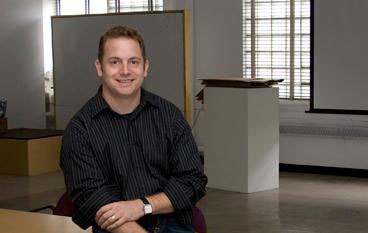
By JAMES NADEAU This week I sat down and chatted with Michael Mittelman, founder, editor, and publisher of Aspect: The Chronicle of New Media Art. Aspect is a bi-annual DVD magazine dedicated to time-based work. They bring together artists and academics to display and talk about contemporary media art. Aspect recently celebrated their 100th published work of art. In honor of this they are selling their entire back catalog in a collection for $200. So, 100 works of art for $200. Michael and I chatted about their history, the reason they exist,…
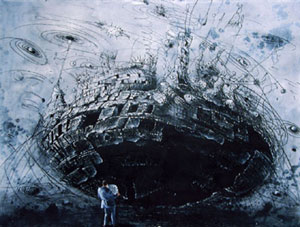
By NATALIE LOVELESS As many reviews on Gerry Bergstein’s current work have noted, there is something new to see here: small story book figures– “witnesses” inserted into Bergstein’s cataclysmic landscapes. I Love Architecture #3 shows a red-shirted man, holding a hammer as long as his thigh, and a girl with a purple skirt; I Love Architecture #4 offers a blue suited man in a casual contraposto; in Men, the hammer-toting man is joined by two other work men (all somehow reminiscent of Rivera’s monumental new-socialist worker) and I Love Architecture #1 includes…