





Newest Features
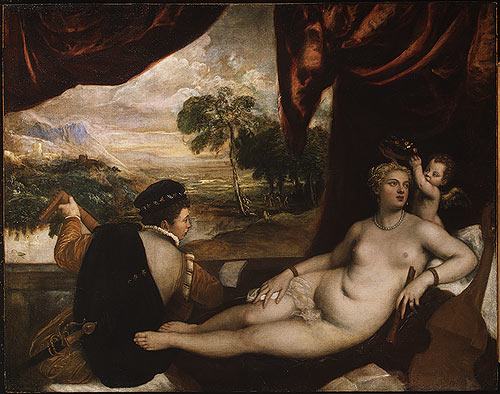
By STEVE AISHMAN So I’m looking at Titian’s Venus and the Lute Player when I overhear a discussion being led by a teacher and some students: Teacher: “What do you think this painting is about?” Student A: “It seems to be about whether beauty is better apprehended through sight or through sound.” Student B: “I think it’s just another example of pre-19th century art that assumes one single point of view of what beauty even can be. I mean seriously, another nude white woman as the object of beauty…” Student A: “I…
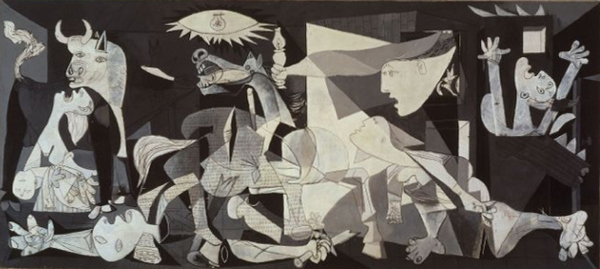
By KURT COLE EIDSVIG PoIesis is etymologically derived from the ancient Greek term ποιέω, which means “to make”. This word, the root of our modern “poetry”, was first a verb, an action that transforms and continues the world. Neither technical production nor creation in the romantic sense, poietic work reconciles thought with matter and time, and man with the world. – Wikipedia This column presents the poetry of Kurt Eidsvig, in juxtaposition to the dialogue around art and culture also featured at Big RED & Shiny. THIS GUERNICA If I could leave…
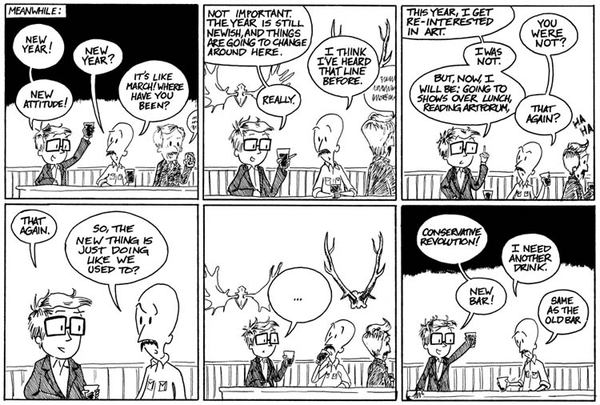
By THOMAS MARQUET #56: New Year! New attitude! Thomas Marquet is a cartoonist, sculptor, and critic, based in Brooklyn.
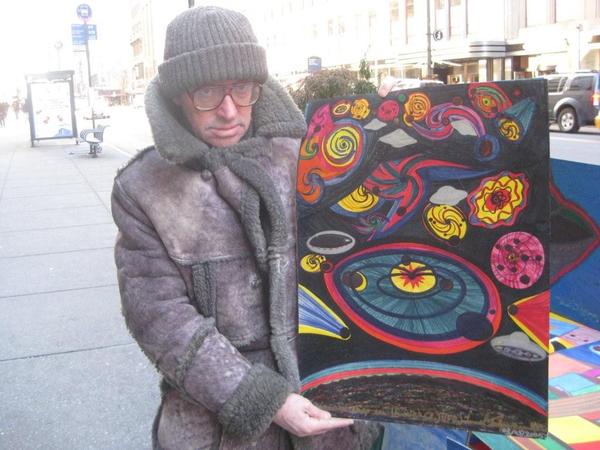
By RIVER CORTES The 18th annual Outsider Art Fair took place this year from February 5-7 in Manhattan. For the second consecutive year, it was held at 7 West 34th Street, in the shadow of the Empire State Building. Inside, there was an endlessly engaging – in fact, overwhelming – array of “outsider art” pieces. The genre’s loose and controversial definition covers the artwork of a wide variety of untrained, self-taught, significantly disabled or otherwise outside-the-mainstream artists. The hours can pass quickly at an event like this. The first artwork to be…

By KAREN S. FEGLEY Although World War II ended 65 years ago and its slipstream, the Cold War, began to grind to a halt around 1985, the world remains an unquiet place. Since the Cold War, we have witnessed bloody conflicts in Bosnia, the Congo, and Palestine (to name a few); the destruction of the Twin Towers and the wars in Afghanistan and Iraq in response; and a continuing litany of catastrophes both natural and manmade — Chernobyl, AIDS, the 2004 Asian tsunami, widespread poverty. The photographs presented in “Questions Without Answers”…
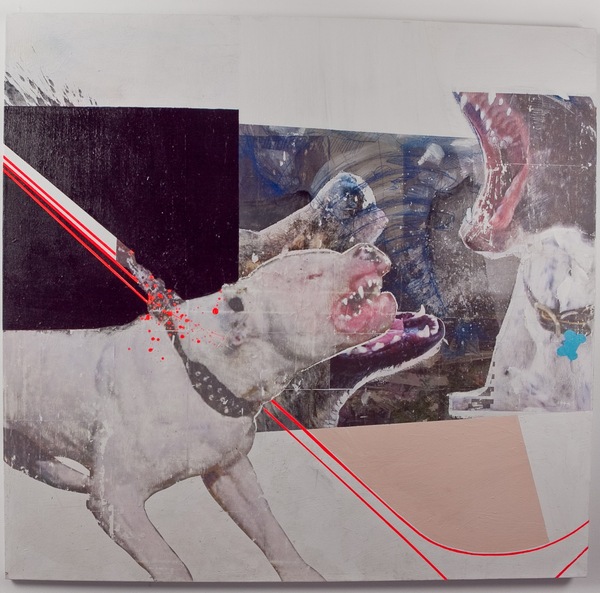
By STEPHEN V. KOBASA War’s dogs are out and about. We should know this. A thousand Americans dead in Afghanistan, and the number of slaughtered civilians only an underestimated approximation. But we are not keen to have such news. In a recent essay on the disappearance of journalism, the reporter Chris Hedges declares that “in an age of profound culture decline…manipulation is more highly valued than truth…” This insight applies equally to the challenge of Phil Lique’s art, with its demand that we look at the world as it is, and not…
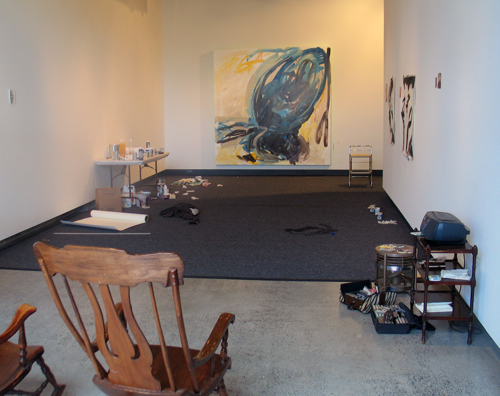
By MICAH J. MALONE Two recently opened shows in Portland, Oregon have positioned traditional and craft skills as a series of political acts: gestures that challenge convention and seek to re-affirm new roles within the discourse of art. While Timothy Scott Dalbow’s exhibition at the New American Art Union identifies itself as an “act of reversal” or “critique of post-studio practice”, it relies on the category of “post-studio” to locate itself. On the other end, the Museum of Contemporary Craft’s “Gestures of Resistance” relies on an acceptance, or reverence, for post-studio practice,…
By JUDY KERMIS BLOTNICK Since last fall Toyota has recalled more than 8 million vehicles, 6 million of which were in the U.S. alone. Among the problems listed were accelerator pedals that got stuck, making it very difficult to stop the cars. James E. Lentz III, president of Toyota Motor Sales USA, has appeared before the House Energy and Commerce Committee to defend Toyota and apologize for the way the company has handled the recall and the overall lack-of-quality control crisis. What does this have to do with art? Well, what if…