





Newest Features
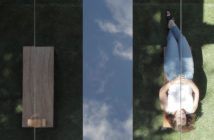
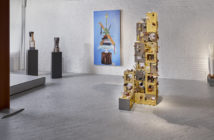

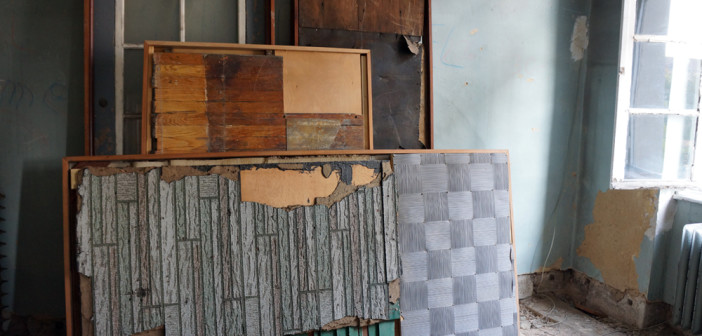
dOCUMENTA 13 (or d13) is one of the exhibitions I wish I had been able to travel to this year. Founded by Arnold Bode in 1955, the exhibition originally was part of a flower show that happened every year in Kassel Germany. It is 100 days of events and exhibitions that really has helped define the town since its inception. It has become the most individual exhibition on the international art fair circuit as it isn’t held in a convention center or in temporary white walls; it strives to be as site…

First Friday. It’s the one thing that if you don’t know a ton about local art, you have probably taken part in. First Friday is complicated, as it is a host of groups and concerns working on the same night, sometimes for the same goals. The ICA recently joined the fray with themed events. The MFA has a ticketed event in the Shapiro Family Courtyard every month. The galleries of Harrison, or Thayer st, or whatever they’re calling it now offer up public openings while their upstairs neighbors, the SOWA guild, offers…
1980’s Boston was very different from today’s Boston. There was an area called the combat zone, which effectively ran from the common to south station, overlaping Chinatown and the leather district. It was the home of 11th hour gallery, run by Mike Carroll and Penelope Place; 38 Thayer, run by Steve Stain; and neighboring The Atlantic, run by Jeff and Jane Hudson. What was going on in these galleries? Well, the underground art scene. Underground was the catch all phrase for post punk, punk, electro, midnight movies, performance art, installations, and the…

Breathing life into the empty spaces on busy city streets, pop-up shops have become an innovative solution for re-energizing and re-using once occupied retail spaces. The pop-up phenomenon has been around for years, but given the recent economic situation they’ve become a favorable tool for temporary urban revitalization. From November 30 through December 24 in an effort to contribute to the current revitalization of Dudley Square, Discover Roxbury—a local non-profit organization working to promote the social, cultural, and economic development of Roxbury and the Madison Park Community Development Corporation, have joined forces…
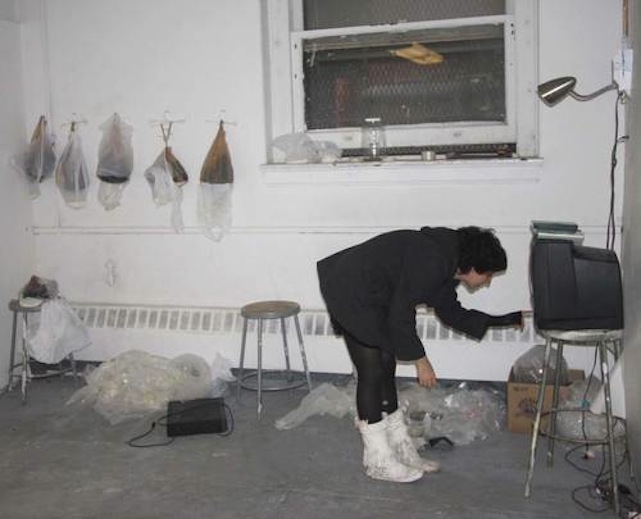
Aliza Shvarts went to Yale for her undergrad. This is a very dispassionate reading of Shvarts’ career at Yale which concluded with a proposal for her final art project that pushed numerous buttons. To say that the project was never well received is an understatement. The only dialog that it created was the type of anonymous verbal attacks that we associate with web comments. If there were any real critical analysis of her work, it was buried by unsigned questions about her sanity, motivations, or accusations about her as a person, her…
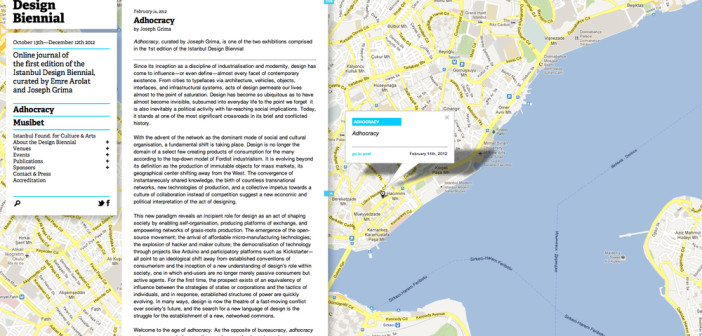
Earlier this fall, we published an article about the Barcelona-based curatorial duo Latitudes on Our Daily Red blog. The post came in the wake of Latitudes’ interview with Robin Dowden, Nate Solas and Paul Schmelzer from the Walker Art Center in Minneapolis: Beyond Interface was the first in a series of 10 interviews with artists, designers, architects, curators, publishers etc. on the subject of #OpenCurating. Open Curating is Latitudes’ term for contemporary art projects and publishing practices that use current and emerging technologies to function beyond the traditional format of exhibition-and-catalogue. In…
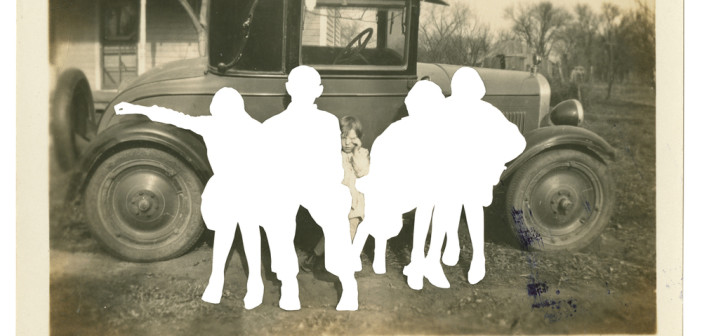
In this month’s journal, we have two photographers, an exhibition of abstract photography, and an artist from Memphis who uses video. It’s funny how though we don’t plan out each journal to have specific themes that somehow they appear to have one. Kris Wilton recorded an interview with Caleb Cole, an artist who was trained as a photographer. His recent works, which happens to be at Gallery Kayafas currently, are not traditional photographs. Cole’s Odd Man Out is a series of manipulated images where all but one person from a group are…
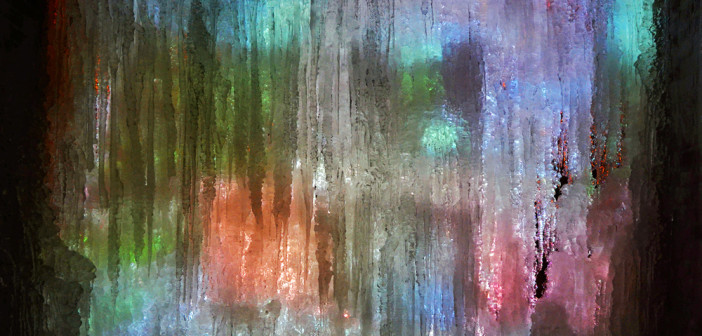
Photography is generally understood to be an excellent means of instantly capturing things as they are. In theory, the mechanism of the lens, shutter, and film (or digital sensor) is something that just captures reality. Of course, many of the photographic specialists reading this will think that this idea sounds silly. The camera and film’s blunt compliance to the lens may generate a visual truth, but the photograph does not need to be true to be a photograph. The photograph isn’t the camera, and the truth that the photograph tells does not…